
Introduction
When sourcing Acacia acuminata for research, botanical study, or craft applications, one of the first decisions you’ll face is choosing between powdered material and whole phyllodes. Both forms come from the same plant, but they behave very differently in practical use. The right choice depends on your specific application, storage situation, budget, and how much processing you want to do yourself. In this guide, we break down the full acacia acuminata powder vs whole comparison so you can make an informed decision before you buy. Whether you’re a first-time buyer or a returning customer looking to switch forms, this educational overview covers everything you need to know — from handling and storage to quality indicators and practical use cases.
What Is Acacia Acuminata?
Acacia acuminata, commonly known as Raspberry Jam Wattle or Jam Tree, is a native Australian shrub or small tree found primarily in the semi-arid regions of Western Australia. It belongs to the legume family (Leguminosae) and is one of the most widely studied members of the Acacia genus.
Key facts about the plant:
- Grows as a multi-stemmed shrub or small tree, typically 2 to 5 meters tall
- Named for its distinctively scented wood — freshly cut branches smell strongly of raspberry jam
- Produces narrow, elongated phyllodes (modified leaf stalks) that are deep green and sharply pointed
- Grows naturally in sandy, gravelly, and loamy soils with low rainfall and low fertility
- Has been studied extensively in ethnobotanical and phytochemical research
- The phyllodes and bark are the most commercially available and most studied parts of the plant
- Well-documented history of use among Aboriginal Australian communities
Commercially, Acacia acuminata is most commonly sold in two forms: whole dried phyllodes and finely milled powder. Each form has distinct physical properties, handling requirements, and practical applications.
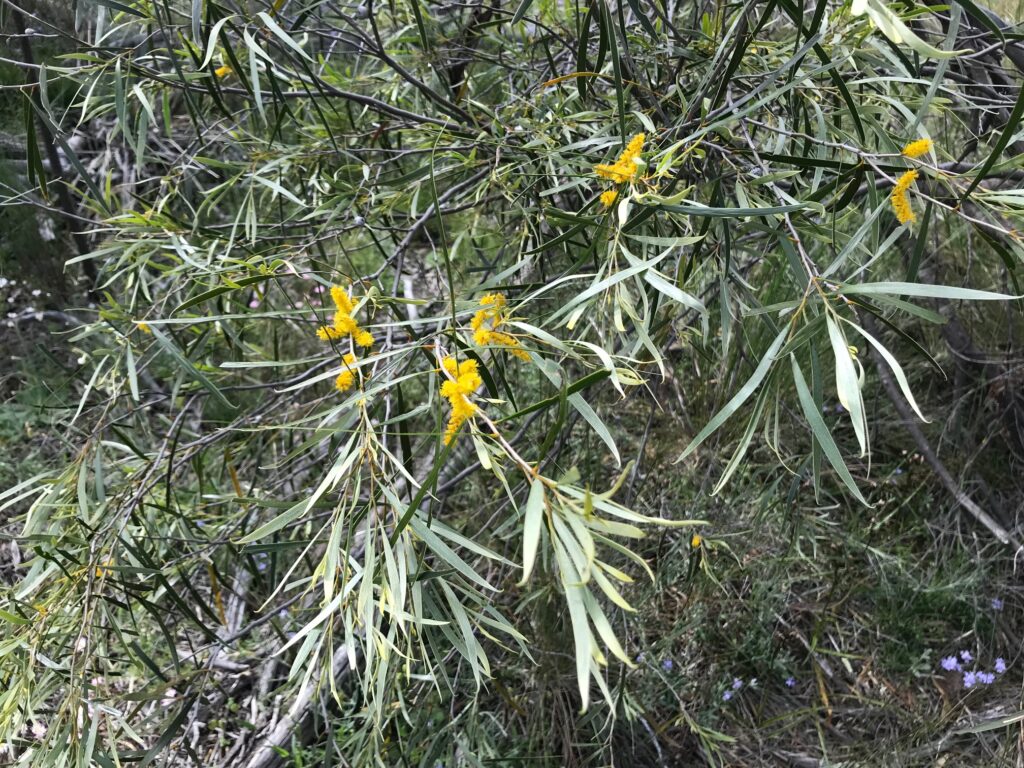
Available Forms: Powder vs Whole Phyllodes
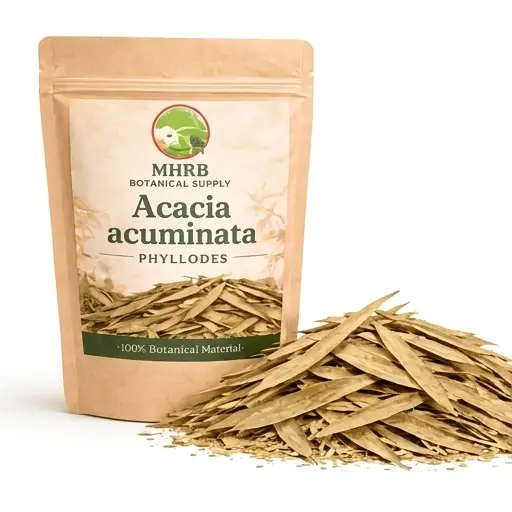
Whole Acacia Acuminata Phyllodes
Whole phyllodes are the dried, unprocessed leaf-like structures harvested directly from the Acacia acuminata plant. After harvesting, they are carefully dried and packaged with minimal processing.
- Appear as long, narrow, dark green to grey-green dried strips
- Typically 5–12 cm in length and 2–5 mm in width
- Firm, leathery texture with visible longitudinal veins
- Retain their full botanical structure — shape, fiber, and surface characteristics are intact
- Require additional processing (grinding or shredding) before most powder-based applications
- Easiest form for visual authentication — the natural phyllode structure is clearly visible
- Most stable form for long-term storage
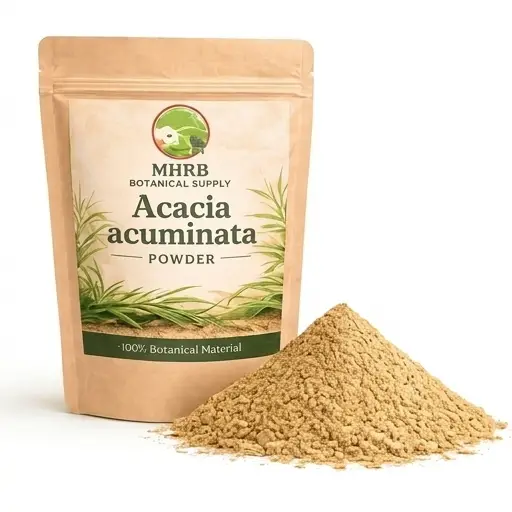
Acacia Acuminata Powder
Powdered Acacia acuminata is produced by milling whole or shredded phyllodes into a fine, consistent powder using industrial or laboratory-grade milling equipment.
- Uniform fine texture — particle size typically under 100 microns
- Color ranges from pale green to olive-brown depending on the batch and part of the plant milled
- Ready to use immediately with no additional preparation required
- Highest surface area of the two forms — affects how quickly compounds are extracted or dispersed
- More susceptible to moisture absorption, clumping, and oxidation than whole material
- Requires airtight packaging and careful storage to maintain quality
- Ideal for applications requiring precise measurement and consistent particle size
Powder vs Whole: Detailed Comparison
Acacia Acuminata Powder
- No further processing required — ready to use straight from the container
- Highest surface area of the two forms — beneficial for extractions and formulations requiring rapid dispersion
- More convenient for applications requiring exact weight measurements
- Prone to moisture absorption — clumping is a common storage issue if not sealed properly
- Shorter shelf life than whole phyllodes (12–18 months under optimal storage conditions)
- Harder to visually authenticate for quality and origin than whole material
- Generally costs more per gram than whole phyllodes due to the additional milling process
- Fine particle nature means inhalation risk during handling — always use a dust mask and eye protection
- Excellent for soapmaking, botanical formulations, resin-based craft applications, and research requiring consistent particle size
- Packaging integrity is critical — even brief exposure to humidity can degrade quality significantly
Whole Acacia Acuminata Phyllodes
- Requires additional processing (grinding, milling, or shredding) before powder-based applications
- Lowest surface area of the two forms — more controlled extraction rate
- Harder to measure precisely by volume; accurate measurement requires a scale
- Most resistant to moisture and oxidation — whole cellular structure remains intact
- Longest shelf life of the two forms (18–36 months under proper storage conditions)
- Easiest to visually assess for quality — color, texture, fiber integrity, and origin are all observable
- Most affordable option per gram due to minimal post-harvest processing
- No inhalation risk during handling unless the material is ground or broken up
- Preferred by buyers who have their own processing equipment and want full control over particle size
- Best for long-term storage, bulk buying, and applications where processing is done in-house
Key Differences Summary
- Processing required: Powder (none — ready to use) | Whole (requires grinding or milling)
- Surface area: Powder (high) | Whole (low)
- Shelf life: Powder (12–18 months) | Whole (18–36 months)
- Storage sensitivity: Powder (high — moisture and air sensitive) | Whole (moderate — more forgiving)
- Price per gram: Powder (higher) | Whole (lower)
- Ease of measurement: Powder (easy — consistent particle size) | Whole (requires scale)
- Visual quality check: Powder (difficult) | Whole (easy — structure visible)
- Handling risk: Powder (dust mask recommended) | Whole (low risk)
- Best for: Powder (formulations, soapmaking, research) | Whole (bulk storage, in-house processing, long-term stock)
- Authenticity verification: Powder (harder) | Whole (easier — natural structure intact)
Which Should You Choose?
The right form depends entirely on how you plan to use the material and how you prefer to work.
Choose powder if:
- You want a ready-to-use product with no additional equipment needed
- You are making botanical soaps, formulations, or craft preparations requiring fine, consistent material
- You are conducting research that requires uniform particle size and precise measurement
- You are working in small batches and want to minimize preparation time
- You already have proper airtight storage containers to preserve freshness
Choose whole phyllodes if:
- You have a grinder, blender, or herb mill and prefer to process material yourself
- You are buying in bulk and want maximum shelf life from your stock
- You want to visually inspect and authenticate the material before use
- You are on a tighter budget and want the most cost-effective option per gram
- You want the flexibility to use the material in multiple forms — whole for some applications, ground for others
Still unsure? First-time buyers often benefit from purchasing a small quantity of both forms to compare handling, texture, and performance before committing to a larger bulk order.
Storage and Handling Differences
Proper storage is essential for both forms, but each has distinct requirements.
Storing Acacia Acuminata Powder
- Store in a glass jar with an airtight, sealed lid
- Add a food-grade silica gel desiccant packet inside the container to absorb ambient moisture
- Keep in a cool, dark location — away from direct sunlight, heat sources, and humidity
- Avoid opening the container frequently — every opening exposes the powder to air and moisture
- Never store in plastic bags long-term — powder can absorb plastic odors and moisture passes through more easily
- Ideal storage temperature: below 20°C (68°F)
- Shelf life: 12–18 months under optimal conditions; inspect regularly for clumping or color changes
Storing Whole Acacia Acuminata Phyllodes
- Store in sealed bags (vacuum-sealed preferred) or airtight containers
- Less sensitive to brief air exposure than powder, but still requires a dry environment
- Can be stored in paper or breathable fabric wrapping for very long-term archival storage
- Keep away from direct sunlight, which can bleach color and degrade phytochemical content
- Ideal storage temperature: cool and dry, below 25°C (77°F)
- Shelf life: 18–36 months or longer when stored properly
General Handling Tips (Both Forms)
- Always use clean, dry tools — moisture introduced during handling degrades both forms
- Label all containers with batch number, purchase date, and origin
- When grinding whole phyllodes at home, wear a dust mask and eye protection — fine particles are an inhalation irritant
- If you notice any musty smell, visible mold, or significant color change, do not use the material
- Rotate stock — use older batches before opening new ones
Recommended Products
Ready to purchase? Explore our full range of ethically sourced Acacia acuminata in both forms:
- 🌿 Acacia Acuminata Powder — fine milled, ready to use, multiple sizes
- 🌿 Acacia Acuminata Whole Phyllodes — dried, whole, ideal for bulk and long-term storage
- 🌿 Browse All Acacia Products — full range of sustainably sourced Acacia species
All products are tested for quality, sustainably harvested, and shipped in moisture-resistant, discreet packaging.
Frequently Asked Questions
1. Is acacia acuminata powder stronger than whole phyllodes? Both forms come from the same plant material and share the same phytochemical composition by dry weight. The difference between powder and whole phyllodes is in surface area, convenience, and handling — not in potency or compound concentration.
2. Can I grind whole Acacia acuminata phyllodes into powder at home? Yes. A high-powered blender, herb grinder, or laboratory mill can convert whole phyllodes into powder. Always wear a dust mask and eye protection during grinding, as fine botanical dust is an inhalation irritant. Grind in short bursts to avoid overheating the material.
3. Which form is better for soapmaking? Powder is generally preferred for soapmaking because it disperses evenly through soap bases and provides consistent color distribution. Whole phyllodes would need to be ground before use in most soapmaking applications.
4. How do I know if my acacia acuminata powder is authentic? High-quality Acacia acuminata powder should be a pale green to olive-brown color with a faint earthy, woody scent. Because powder is harder to authenticate visually than whole phyllodes, always purchase from a reputable supplier who provides batch testing, origin documentation, and transparent sourcing information.
5. Does the form affect the price significantly? Yes. Powder typically costs 15–30% more per gram than whole phyllodes of equivalent quality, due to the additional milling process. Buying in larger quantities reduces the per-gram cost for both forms. Whole phyllodes offer the best value for bulk buyers who have their own processing setup.
Conclusion
Choosing between acacia acuminata powder vs whole phyllodes comes down to how you plan to use the material, how you store it, and how much processing you want to do yourself. Powder is the more convenient option — ready to use, easy to measure, and ideal for formulations and research. Whole phyllodes offer superior shelf life, easier quality verification, and better value for bulk buyers. There is no universally “better” form — only the right form for your specific situation. Whichever you choose, prioritize a reputable, transparent supplier who can confirm origin, quality testing, and sustainable harvesting practices.
Compliance Disclaimer
This article is intended for educational and informational purposes only. The information provided does not constitute medical, legal, or professional advice of any kind. Acacia acuminata is sold strictly as a botanical specimen for research, botanical study, soapmaking, and other lawful purposes. It is the sole responsibility of the buyer to understand and comply with all applicable local, state, national, and international laws regarding the purchase, possession, and use of this material. The seller and author make no claims regarding therapeutic, psychoactive, or medicinal properties of this product. This product is not intended to diagnose, treat, cure, or prevent any disease or condition.