
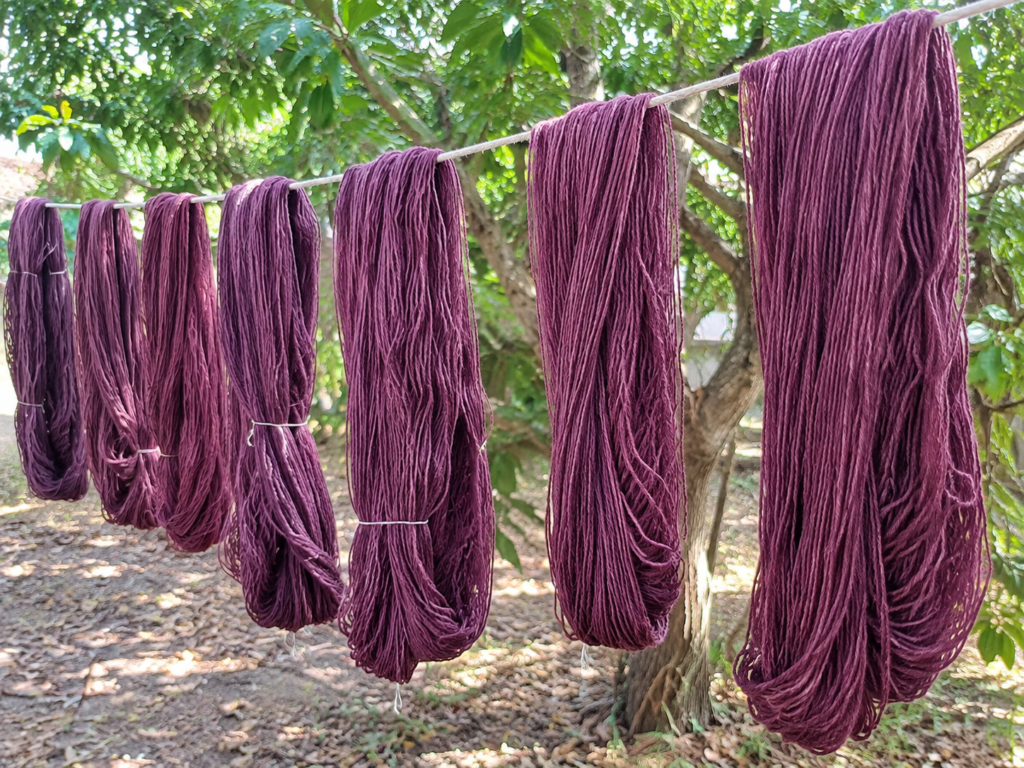
Few natural dyes give such a wide range of color from a single plant as mimosa hostilis dye. Made from the inner root bark of Mimosa tenuiflora, it produces soft mauves, deep burgundies, warm red-browns and smoky greys, depending on your fabric and mordant. This guide walks you through the full process, from choosing your bark to rinsing your finished piece.
New to the plant itself? Start with our guide, What Is Mimosa Hostilis Root Bark?, then come back here to start dyeing.
You can Also Purchase Mhrb To begon Natural Dye at MHRB Botanical Supply
Why Mimosa Hostilis Root Bark Makes Such a Good Natural Dye
Mimosa hostilis root bark (MHRB) is naturally rich in tannins. Tannins are plant compounds that bond strongly to fibers, which is why bark dyes tend to resist fading better than many flower or berry dyes.
Those same tannins react with metal mordants. That is what lets one dye pot produce very different colors: alum keeps tones warm and bright, while iron pulls them toward grey and charcoal.
MHRB also has a long history outside the dye pot. In Mexico it is known as tepezcohuite, and in Brazil as jurema preta, where it has been used for generations in tanning and traditional crafts.
What Colors Can You Get from Mimosa Hostilis Dye?
Your final shade depends on three things: the fiber, the mordant and the pH of your dye bath. Use this table as a starting point, and always test a swatch first.
| Fiber | Mordant | Typical result |
|---|---|---|
| Wool or silk | None | Pinkish tan to light red-brown |
| Wool or silk | Alum | Warm reddish-brown to burgundy |
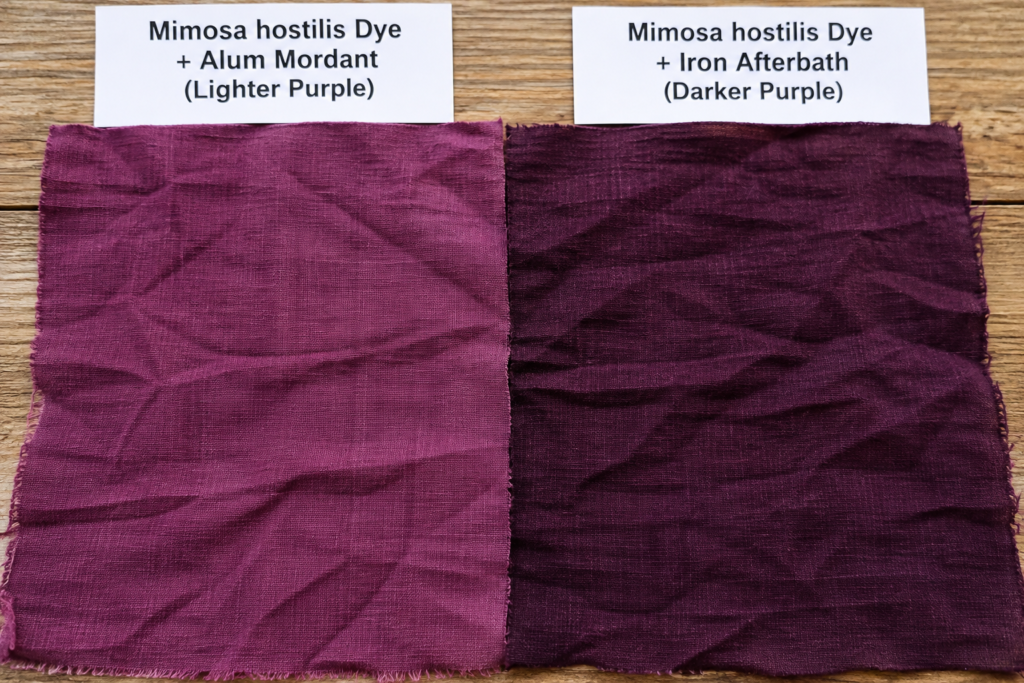
| Wool or silk | Alum, then alkaline rinse | Mauve to dusty purple |
| Wool or silk | Iron afterbath | Grey-purple to deep charcoal |
| Cotton or linen | Alum (cellulose method) | Soft rose-brown to cocoa |
| Cotton or linen | Iron afterbath | Warm grey to slate |
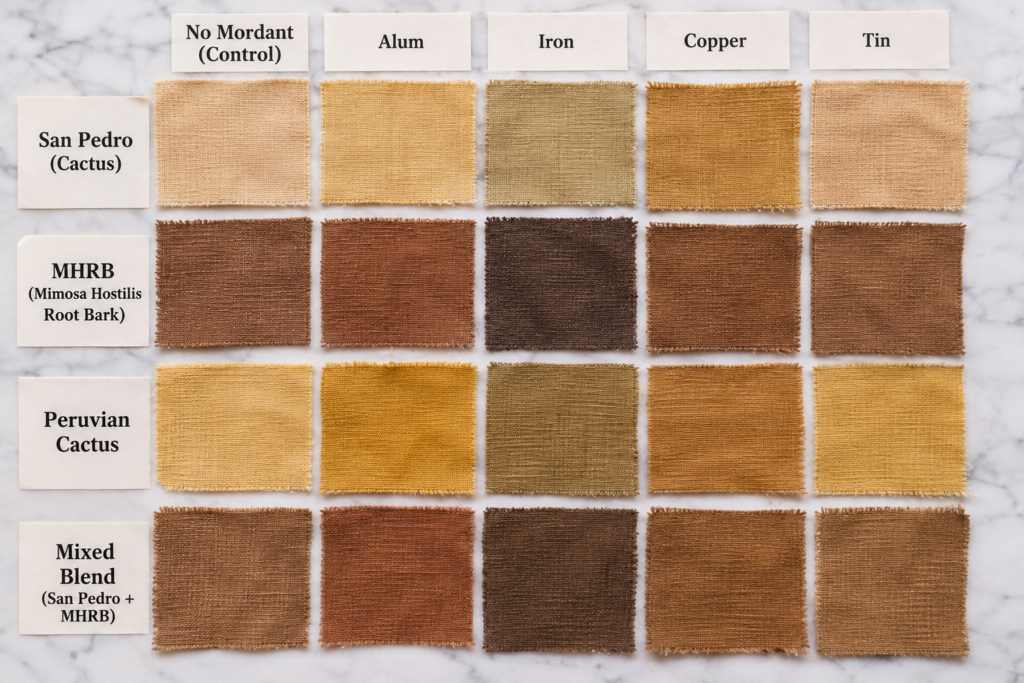
A quick rule of thumb: alkaline water (a pinch of soda ash) shifts the color toward purple, while acidic water (a splash of vinegar) shifts it toward orange and tan.
Which Form of MHRB Is Best for Dyeing?
All three forms of our bark dye well. The difference is mainly in how easy they are to handle.
- Powder releases color fastest and gives the strongest bath for its weight. Put it in a fine mesh bag or strain it through cloth, or you will get specks on your fabric. Try our mimosa hostilis root bark powder.
- Shredded bark strains out cleanly and suits long, slow extractions.
- Whole bark is the least processed. Break it up or soak it overnight before simmering to get the most color. See our Mexican mimosa hostilis whole root bark.
For a full comparison, read Mimosa Hostilis Powder vs Shredded vs Whole. Origin matters too: Mexican and Brazilian bark can differ in color depth from batch to batch, which we explain in Mexican vs Brazilian Mimosa Hostilis.
What You Need
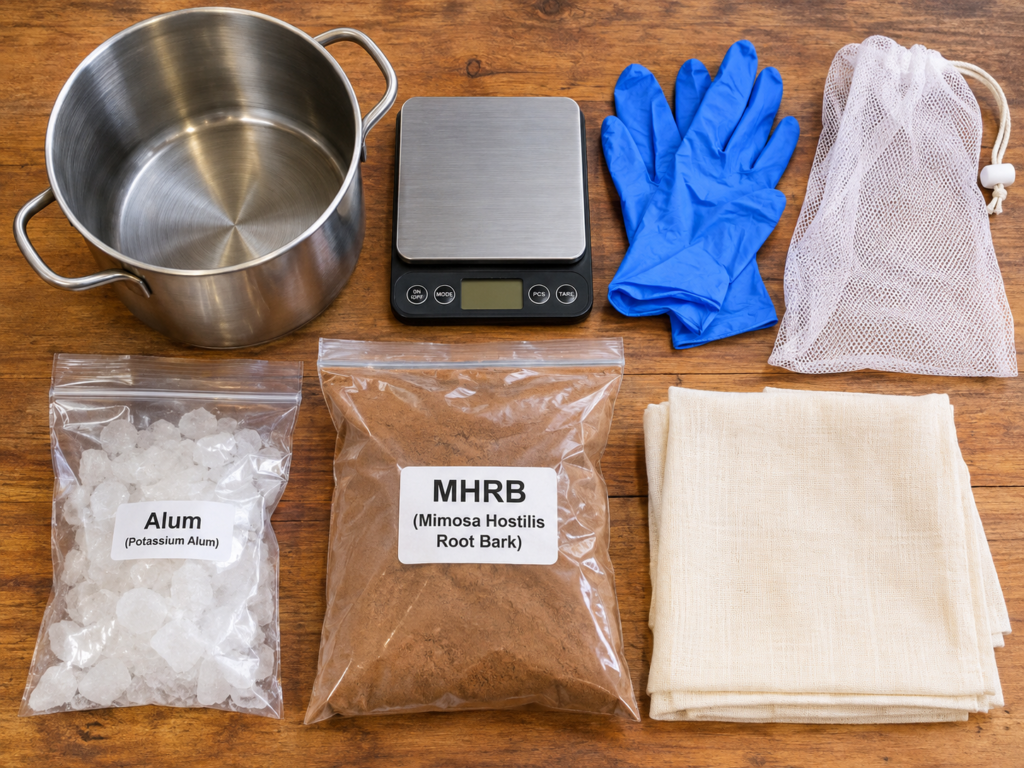
- Mimosa hostilis root bark: 50–100% of your dry fabric weight for medium to deep shades, or about 25% for pale tones
- Natural fiber fabric or yarn: wool, silk, cotton, linen or hemp
- A stainless steel or enamel pot used only for dyeing, never for food
- A kitchen scale, thermometer, stirring stick and rubber gloves
- A fine mesh bag or old cotton cloth for straining
- pH-neutral soap for scouring and rinsing
- Mordant: alum (potassium aluminum sulfate) and, for plant fibers, a little soda ash
- Optional modifiers: iron (ferrous sulfate) for greys, soda ash for purples
Tip: dye recipes are measured as a percentage of the dry fiber weight (WOF). If your fabric weighs 200 g, 50% WOF means 100 g of bark.
How to Dye Fabric with Mimosa Hostilis Root Bark: Step by Step
Step 1: Weigh and scour your fabric
Weigh the fabric while dry and note it down. Then wash it in hot water with a little pH-neutral soap to remove oils, sizing and dirt. Even new fabric has finishes that block dye, so don’t skip this step.
Step 2: Mordant the fiber
Mordanting helps the dye bond evenly and improves fastness.
- Wool and silk: dissolve alum at 10–12% WOF in hot water, add it to a pot of warm water and add the wet fiber. Heat slowly to about 80°C (175°F) and hold for 45–60 minutes, then let it cool in the pot.
- Cotton and linen: dissolve alum at 12% WOF and soda ash at about 1.5% WOF separately, then combine them in a bucket of hot water. Soak the wet fabric for several hours or overnight, stirring now and then.
Rinse lightly afterward. You can dye straight away or dry the fiber and store it for later.
Step 3: Extract the color
Put the bark in a mesh bag, cover it with water and soak it overnight if you can. Then heat it to a gentle simmer, around 80–90°C (175–195°F), for one hour. The water will turn deep red-brown.
Remove the bag or strain the bath through cloth. For extra depth, simmer the same bark a second time and add that liquid to the first.
Step 4: Dye the fabric
Add enough water so the fabric can move freely. Add the wet, mordanted fabric and raise the heat slowly to about 80°C (175°F). Hold it there for 45–60 minutes, stirring gently.
Keep wool below a boil and avoid sudden temperature changes, or it will felt. For deeper color, turn off the heat and leave the fabric to cool in the bath overnight.
Step 5: Shift the color (optional)
[Photo 5 — split swatch: half alum-only, half iron-modified]
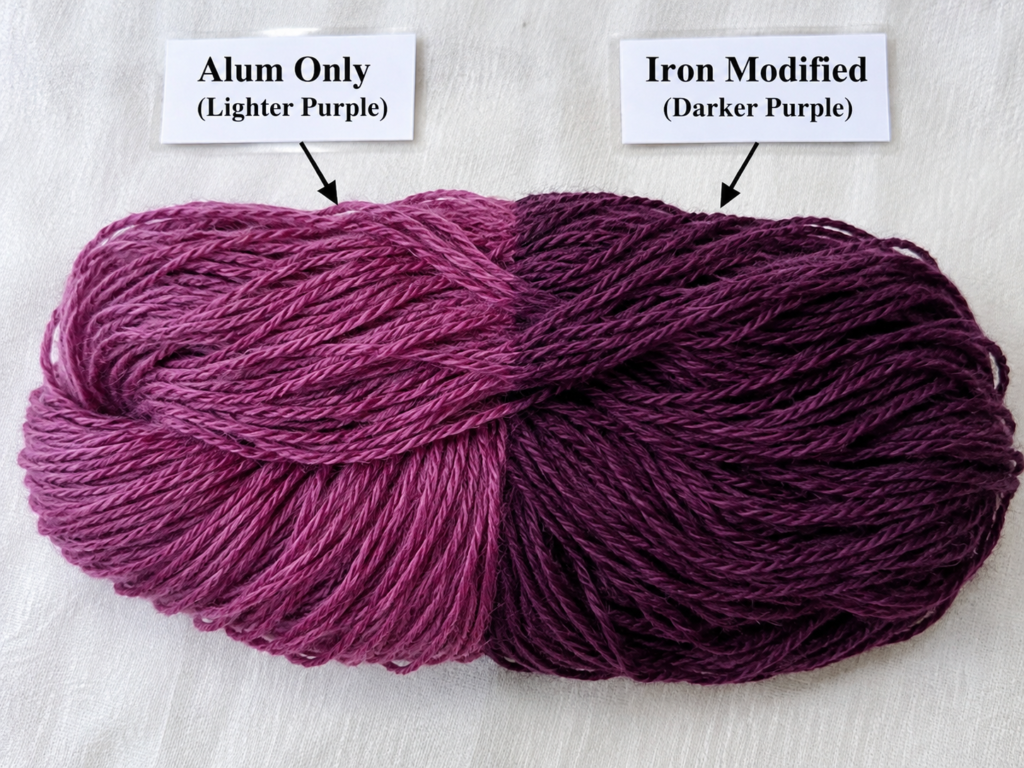
- For grey or charcoal: dissolve iron at 1–2% WOF in warm water. Dip the dyed fabric for 5–15 minutes, watching closely, then rinse. Too much iron makes wool brittle, so use it sparingly.
- For purple tones: add a small pinch of soda ash to a bowl of warm water and dip the fabric for a few minutes.
Step 6: Rinse and dry
Rinse in lukewarm water until it runs mostly clear, then wash gently with pH-neutral soap. Dry the fabric in the shade, since strong sun can fade natural dyes while they cure.
Tips for Better Results
- Test first. Dye a small swatch from each new batch of bark, since natural material varies.
- Use the exhaust bath. A used dye bath still holds color. Run a second piece through it for a lighter, matching shade.
- Start with quality bark. Fresh, deeply colored inner bark gives stronger baths. Our buyer’s guide to quality MHRB shows what to look for.
- Keep notes. Record fabric weight, bark amount, mordant and time so you can repeat a color you love.
- Store bark well. Keep it in a sealed bag in a cool, dark, dry place to protect its color between projects.
Safety Notes
- Use dedicated pots, spoons and buckets that never go back to the kitchen.
- Wear gloves, and work in a ventilated space when simmering.
- Store mordants, especially iron, labeled and out of reach of children and pets.
- Our botanicals are sold as natural materials for dyeing, crafts and botanical study. They are not for human consumption.
Frequently Asked Questions
Is mimosa hostilis dye colorfast?
Tannin-rich bark dyes are generally among the more lightfast and washfast natural dyes, especially on mordanted wool and silk. Wash dyed items in cool water with pH-neutral soap and dry them out of direct sun.
How much mimosa hostilis root bark do I need?
Use about 50–100% of your dry fabric weight for medium to deep shades. For 100 g of yarn, that means 50–100 g of bark.
Do I need a mordant?
Not strictly, because the bark’s tannins bond to fiber on their own. A mordant gives brighter, more even and longer-lasting color, so we recommend it.
Can I dye polyester or other synthetics?
No. Natural dyes bond to natural fibers. Polyester, nylon and acrylic take little or no color, so stick to wool, silk, cotton, linen or hemp.
Why did my fabric turn brown instead of purple?
The dye bath was probably neutral or slightly acidic, or the water was hard. Try a short soda ash dip after dyeing, or use filtered or rain water next time.
Can I use the same dye bath more than once?
Yes. Each new piece comes out a little lighter, which is ideal for creating a matching set of graduated shades.
Start Your Natural Dye Project
Mimosa hostilis dye rewards a little patience with rich, earthy color that is hard to match. Browse our full range of mimosa hostilis root bark in powder, shredded and whole forms, including Mexican mimosa hostilis root bark powder.
Have a question about choosing bark for a dye project? Contact our team and we’ll help you pick the right form and amount.

