Peruvian Torch Cactus (Echinopsis peruviana)
What Is Peruvian Torch Cactus?
Peruvian Torch cactus — known botanically as Echinopsis peruviana and by its widely used synonym Trichocereus peruvianus — is a fast-growing columnar cactus native to the Andean highland regions of Peru. It grows naturally at elevations between 2,000 and 3,000 meters above sea level, where intense Andean sunlight and cool nights produce the species’ characteristic blue-green skin coloration.
The Peruvian Torch is closely related to San Pedro cactus (Echinopsis pachanoi) and belongs to the same subfamily of columnar South American cacti. Both species share a similar growth habit and Andean origin, but the Peruvian Torch is distinctly recognizable by several botanical features that set it apart from its close relative.
Key botanical facts about Echinopsis peruviana:
Scientific name: Echinopsis peruviana
Botanical synonym: Trichocereus peruvianus
Family: Cactaceae
Common names: Peruvian Torch, Blue Torch, Trichocereus peruvianus
Native range: Andean highlands of Peru, northern Chile
Growth habit: Columnar, multi-stemmed, reaching 3 to 6 meters
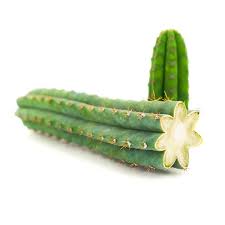
Ribs: 6 to 9 well-defined ribs per stem column
Spines: Longer and more prominent than San Pedro — golden to honey-brown in color, clustered at each areole
Skin color: Distinctly blue-green or glaucous — noticeably bluer than the standard green of Echinopsis pachanoi
Flowers: Large, white, fragrant, nocturnal — up to 20 cm across
Growth rate: One of the fastest-growing cacti — 30 to 60 cm per year
Cultural significance: Documented in Andean ethnobotanical records and widely studied by researchers in the Trichocereus genus
The species has been documented in botanical literature for over 150 years and remains one of the most studied columnar cacti in the world. It is a staple of academic ethnobotanical collections and botanical archives concerned with Andean plant species.
How Is Peruvian Torch Cactus Different From San Pedro?
Buyers who are familiar with San Pedro cactus (Echinopsis pachanoi) often ask how Peruvian Torch differs. While both species are closely related Andean columnar cacti from the Trichocereus group, there are clear botanical differences between them.
Skin color:
San Pedro (Echinopsis pachanoi): standard medium green
Peruvian Torch (Echinopsis peruviana): distinctly blue-green or glaucous — one of the most visually distinctive features of the species
Spines:
San Pedro: shorter, finer spines — often barely visible
Peruvian Torch: longer, more prominent golden to honey-brown spines clustered at each areole — a key identification feature
Rib count:
San Pedro: typically 6 to 8 ribs
Peruvian Torch: typically 6 to 9 ribs, often more defined
Growth rate:
Both are fast-growing, but Peruvian Torch frequently outpaces San Pedro in raw annual growth under comparable conditions
Dried material color:
San Pedro powder and skin: deep green to olive-green
Peruvian Torch powder and skin: blue-green to grey-green — the distinctive glaucous pigmentation is often partially preserved in dried material
These botanical differences make Peruvian Torch dried skin and powder particularly valuable for comparative species studies and for collections that distinguish between closely related Trichocereus species.
Available Forms of Peruvian Torch Cactus
We offer Peruvian Torch cactus (Echinopsis peruviana) in two commercially available forms. Each serves a distinct purpose and suits different research, collection, and application needs.
Peruvian Torch Cactus Powder:
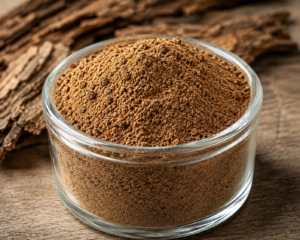
Our powder is produced by finely milling dried Echinopsis peruviana outer skin material to a consistent, uniform particle size. It is ready to use immediately with no further processing required.
Best suited for:
Botanical reference collections requiring uniform material samples
Research applications needing precise weight-based measurement
Natural dye and pigment projects requiring fine, consistent texture
Formulation and craft applications where powder form is preferred
Archival documentation requiring compact, easily labeled samples
Key characteristics:
Finely milled, consistent particle size throughout
Blue-green to grey-green color characteristic of Echinopsis peruviana
No additives, fillers, or chemical processing
Sealed in airtight, moisture-resistant packaging
Shelf life: 12 to 18 months under optimal storage conditions
Peruvian Torch Cactus Dried Skin:
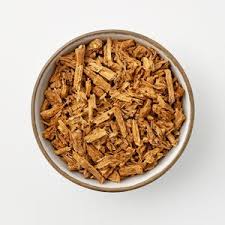
Our dried skin consists of the whole outer layer of the Echinopsis peruviana stem — hand-harvested from mature cultivated specimens, slowly sun-dried, and packaged without chemical treatment of any kind.
Best suited for:
Botanical and ethnobotanical reference collections valuing specimen authenticity and original plant morphology
Comparative species studies distinguishing Trichocereus peruvianus from related Echinopsis species
Natural dye projects where the full plant structure is preferred
Collectors and archivists who process material themselves
Long-term botanical storage where maximum shelf life is a priority
Key characteristics:
Whole outer skin strips retaining original blue-green color
Firm, fibrous texture with visible areole structure
Longest shelf life of the two forms — 18 to 36 months stored correctly
Hand-harvested and sun-dried using traditional Andean methods
No industrial drying, no additives, no chemical modification
Why Source Peruvian Torch Cactus From Us?
At MHRB Botanical Supply, we apply the same sourcing standards to our Peruvian Torch cactus products that we apply to every botanical material in our range. Here is what that means in practice.
Direct cultivated sourcing: We source exclusively from cultivated Echinopsis peruviana specimens grown by local communities in the Andean highlands of Peru. We do not source wild-harvested material, and we do not purchase from intermediaries who cannot confirm origin.
Batch verification: Every batch of Peruvian Torch cactus powder and dried skin undergoes physical inspection before it is listed for sale. We check color, texture, aroma, moisture level, and structural integrity against our quality benchmarks. Batches that do not meet these standards are not sold.
Clear labeling: Every product leaves our facility labeled with the botanical name (Echinopsis peruviana), the accepted synonym (Trichocereus peruvianus), the country of origin (Peru), the form (powder or dried skin), and a unique lot number for full traceability.
Sustainable practice: Our supply partners in Peru practice responsible, cycle-respecting harvesting that supports the long-term health of cultivated Echinopsis peruviana populations. Sustainability is not a marketing claim for us — it is a sourcing requirement.
Peruvian Torch Cactus: Common Applications
Peruvian Torch cactus (Echinopsis peruviana / Trichocereus peruvianus) is sourced by a wide range of buyers for legitimate botanical and educational purposes. The most common applications include:
Ethnobotanical research: Researchers building reference collections of significant Andean Cactaceae species regularly include Trichocereus peruvianus alongside Echinopsis pachanoi for comparative ethnobotanical study.
Botanical taxonomy and identification: The distinctive blue-green skin, longer spines, and defined rib structure of Echinopsis peruviana make it a valuable physical reference specimen for plant taxonomy coursework and species identification work.
Natural dye and pigment projects: The glaucous blue-green chlorophyll content of Peruvian Torch outer skin is of particular interest to natural dye practitioners working with Andean plant-based color materials.
Herbarium and archival collections: University and institutional plant collections include dried Trichocereus peruvianus specimens for teaching, long-term preservation, and archival documentation of significant Andean botanical species.
Botanical crafts and artisanal work: Natural craft artists working with authentic South American botanical materials use dried Peruvian Torch skin in decorative and handmade product applications.
Storage Guidelines for Peruvian Torch Cactus Products
Proper storage preserves the quality, color, and botanical integrity of both Peruvian Torch powder and dried skin.
For powder:
Store in a sealed, airtight glass jar with a tight-fitting lid
Place a food-grade silica gel desiccant packet inside the container
Keep in a cool, dark location below 20°C (68°F)
Avoid opening frequently — each opening introduces air and moisture
Label with: Echinopsis peruviana / Trichocereus peruvianus · Powder · Lot number · Date received
Shelf life: 12 to 18 months under optimal conditions
For dried skin:
Store in a sealed bag or airtight container away from direct sunlight
Vacuum-sealed bags significantly extend shelf life
Keep in a cool, dry location below 25°C (77°F)
Do not store near strongly scented materials — dried skin can absorb surrounding odors
Label clearly with species name, form, lot number, and date
Shelf life: 18 to 36 months under optimal conditions
Legal Notice and Intended Use
All Peruvian Torch Cactus (Echinopsis peruviana / Trichocereus peruvianus) products are sold strictly as botanical specimens for educational, ethnobotanical, archival, collection, and reference purposes only.
This material is not intended for human consumption. The seller makes no claims regarding therapeutic, medicinal, psychoactive, or any other physiological properties of this product.
It is the sole and complete responsibility of the buyer to verify all applicable local, state, and federal laws regarding the purchase, possession, and use of Echinopsis peruviana / Trichocereus peruvianus material before placing an order.
Botanical name: Echinopsis peruviana (syn. Trichocereus peruvianus) Origin: Peru (cultivated) Available forms: Powder · Dried Skin Additives: None
Showing all 2 results
-
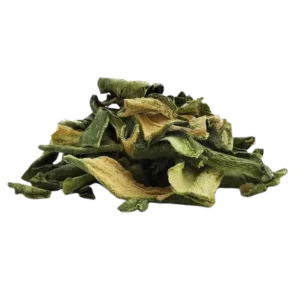
Peruvian Torch Cactus (Echinopsis peruviana)
Price range: $118.99 through $1,000.00 Select options This product has multiple variants. The options may be chosen on the product page -
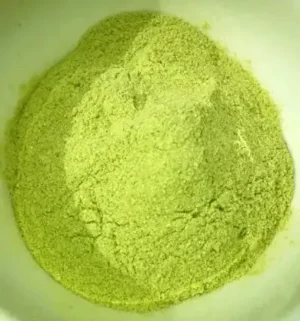
Peruvian Torch Cactus (Echinopsis peruviana)
Price range: $220.99 through $1,100.00 Select options This product has multiple variants. The options may be chosen on the product page
Showing all 2 results
Explore our premium Peruvian Torch Cactus (Echinopsis peruviana) botanical materials, sourced directly from cultivated specimens in the Andean highlands of Peru. Also known as Trichocereus peruvianus, the Peruvian Torch is a fast-growing, blue-green columnar cactus closely related to San Pedro cactus — and one of the most documented species in the Cactaceae family.
We offer Peruvian Torch cactus in two forms: finely milled powder and whole dried skin strips. Both are produced from mature, sustainably harvested plant material with no additives, no chemical processing, and no fillers of any kind. Every batch is clearly origin-labeled and hermetically sealed for long-term botanical integrity.
Whether you are building an ethnobotanical reference collection, conducting botanical research, or sourcing material for natural craft and archival work, our Peruvian Torch cactus products deliver consistent quality, transparent sourcing, and reliable USA shipping.